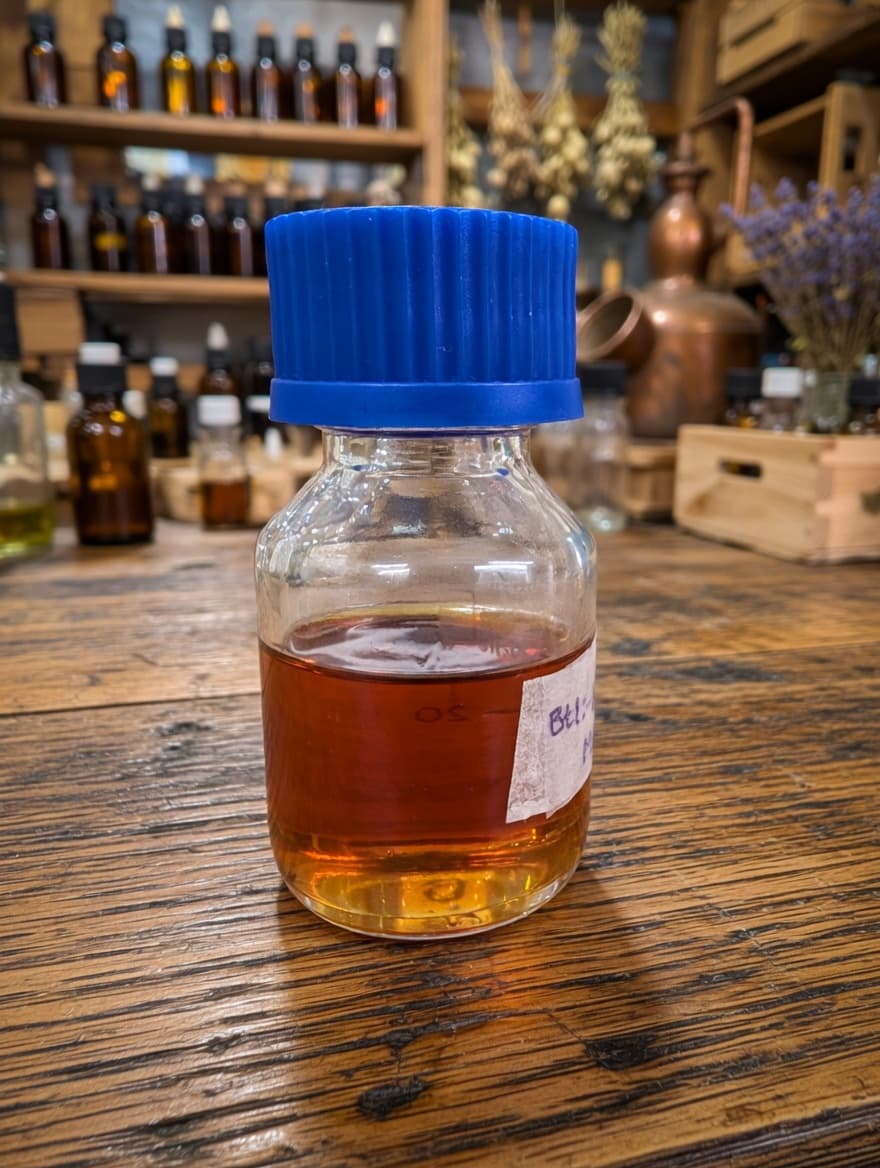
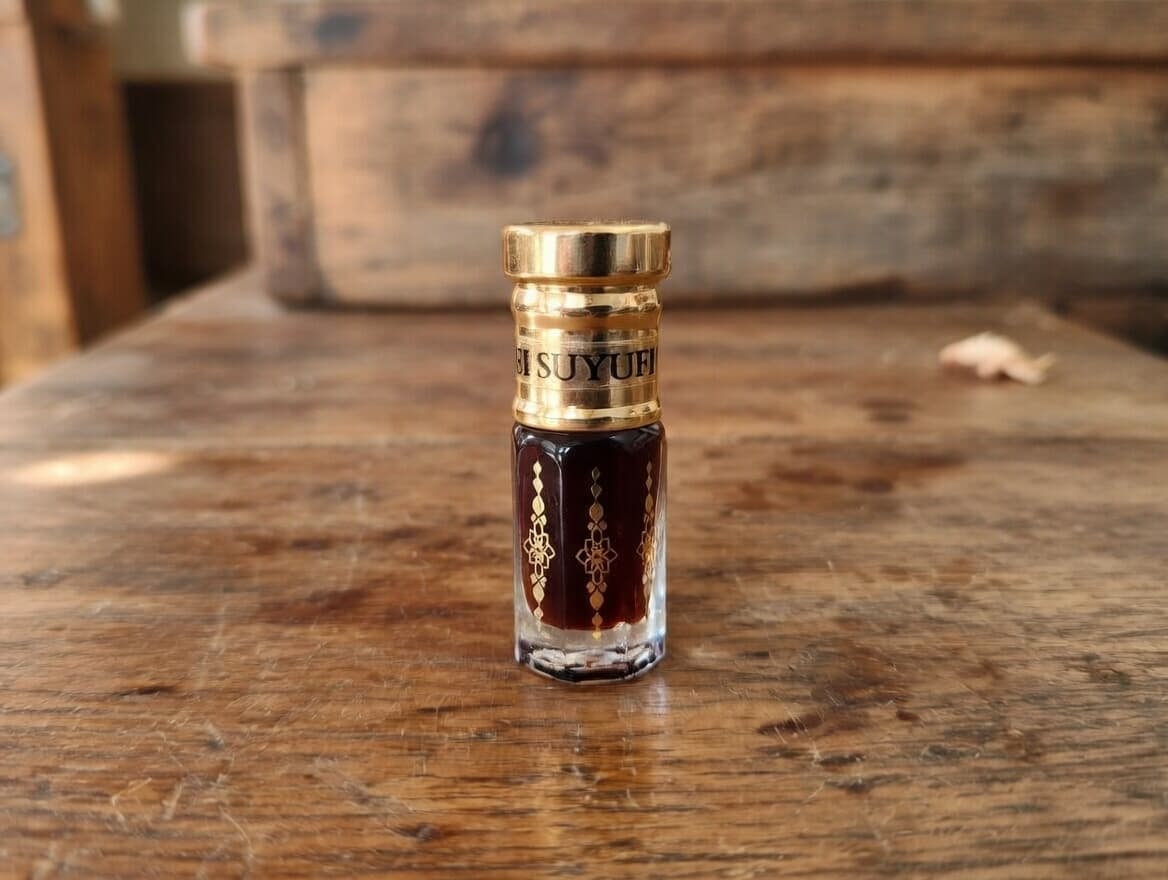
Pure Manipur oud oil — dehn al oudh, the trade's own name for a neat distilled oud — bought direct from the distiller, with no middleman between the still and this bottle. The fragrance is the scar. Agarwood is not a wood the tree grows; it is oleoresin an Aquilaria floods into its own wound after a borer opens the trunk and fungi follow it in. We know who distilled this oil, and where.
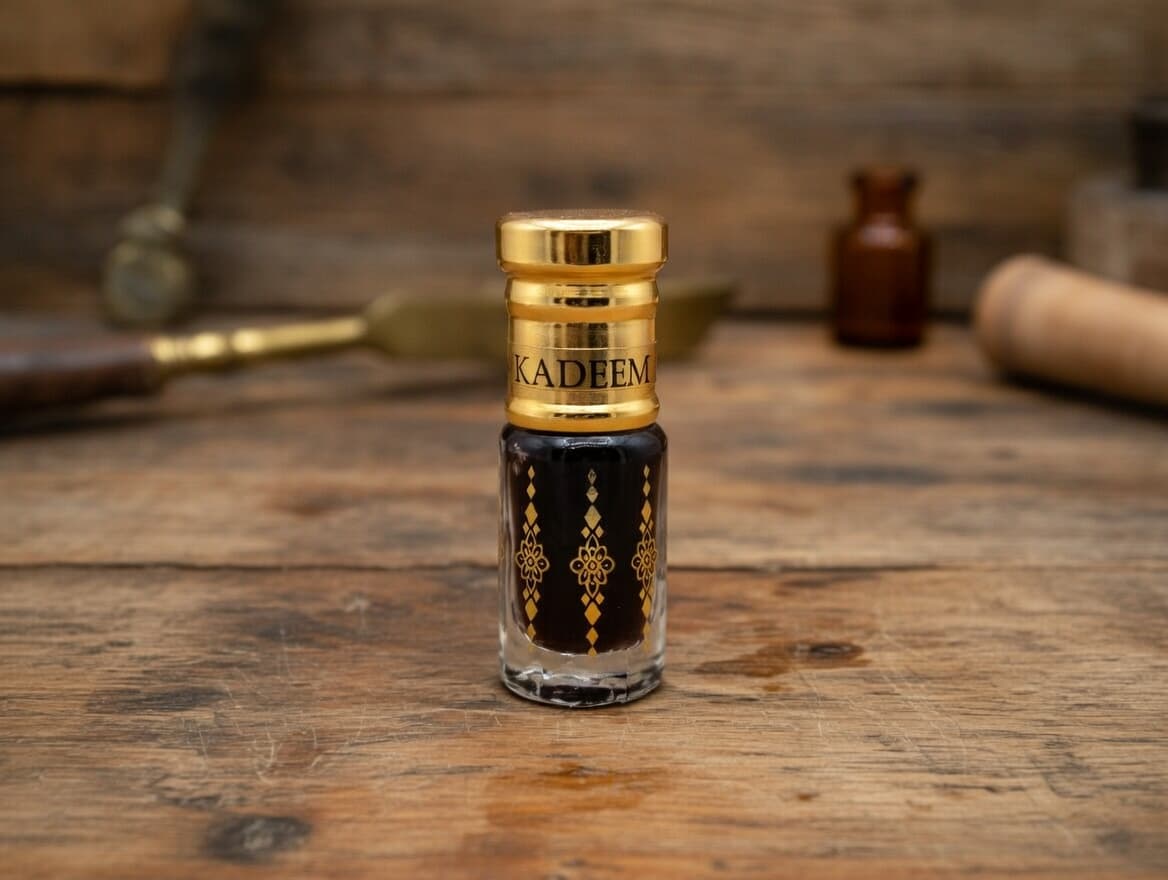
Ten bottles exist — five at 1 ml, five at 3 ml, and no more from this lot. Shipped from Houston, Texas. All sales are final: no returns, opened or unopened.
Bought direct from the distiller
We buy this oil direct from the distiller in Manipur — no trader, no broker. The video and photographs on this page are our own, shot in Manipur among the trees the material came from; they are not a stock library's, and they are the one thing a reseller cannot borrow. What is in the vial is pure Manipur oud oil: a single origin and a single distillation, unblended and undiluted. Nothing added, nothing cut.
That chain matters more here than in almost any other category. The standard field survey of the agarwood trade (TRAFFIC/IUCN, Barden et al., 2000) records oil routinely extended with sandalwood, lodh and sesame, and little consistency between batches. Against that, a line you can follow back to one person is worth more than any assurance we could write.
On the skin
One dab at the wrist — dabbed, never rubbed, and one dab is a full wearing. This is our own account of these bottles, not a specification.
- The opening. A little spice over sweet wood — warm rather than sharp, without the barnyard some Indian ouds open on.
- The settling. The spice softens and the wood turns sweeter and rounder, resinous underneath.
- The dry-down. A sweet, woody warmth that sits close to the skin and keeps going — quiet and clean.
We will not sell you longevity as a grade. Distillers and collectors both say tenacity does not track quality, and the finest oils are often the quieter ones. This one rewards proximity.
If your reference point for oud is a Cambodi
Cambodi reads jammy, honeyed and fruit-forward; this is drier and woodier — sweet in a resinous way rather than a fruity one, with a little warm spice at the top. Closer in spirit than a heavy animalic Hindi would be, but its own thing. Most department-store "oud" contains no agarwood whatsoever, so it is no guide either. Expect a dark, slow-moving liquid — no alcohol, no sprayer, no bright top accord.
Which bottle
If this is your first Indian oud, take the 1 ml. One dab is a full wearing, so a millilitre goes further than the number suggests, and $150 is the honest price of finding out.
The 3 ml is a different decision, and not a discount one. At $399 the arithmetic is $133 a millilitre against $150 — worth knowing, not worth deciding on. Take it because you already know this profile, and because a single distillation does not come back: five exist, roughly half a kilo to a kilo and a third of resinous wood stands behind each millilitre, and there is no reordering this oil in March.
The terms, plainly
Ten bottles: five at 1 ml, five at 3 ml, and no more than two to any one customer so the lot reaches more than a few hands. When they are gone, they are gone — there is no reordering this oil. Shipped from Houston, Texas. All sales are final — we accept no returns, opened or unopened. A millilitre that has left our hands can never again be shown to be unadulterated, so it can never be resold.
If you want to ask anything before you commit — about the oil, the sourcing, or the terms — write to us first. On a bottle that cannot come back, we would rather answer the question than have you guess.
Why Manipur is hard to buy
Assam is where India's agarwood industry actually lives. Hojai — Islamnagar in particular — is the country's trading and distilling capital, and Assam notified a state agarwood policy in 2020, Tripura in 2021. Manipur has no equivalent town, and as of 2026 no comparable state agarwood policy has been reported there. That absence, not folklore, is why a Manipur distillation is difficult to buy.
The scale is a matter of public record. India's export framework, set out in DGFT Notification No. 52/2024-25 of 20 January 2025, allocates Manipur 200 kg of agar oil a year against Assam's 5,560 kg — under three percent of the national figure, and roughly a twenty-eighth of Assam's.
A narrow ribbon of a small state
Manipur is 75.46% forest (Forest Survey of India, ISFR 2019), but Aquilaria malaccensis grows only up to about 1,000 metres, and only about half the state's forest sits in that band. Rain across the state runs 1,200 to 2,700 mm a year. The tree that makes this resin belongs to the warm, wet, lower slopes — a narrow ribbon of an already small state.
The arithmetic of one millilitre
Distillers interviewed for the TRAFFIC/IUCN survey put one litre of agarwood oil at 500 to 1,000 kg of resinous wood, and published hydrodistillation yields for the species agree with that range. A single naturally resinated tree in Assam gives an average of 4 kg (Indian Journal of Traditional Knowledge, 2023).
So roughly half a kilo to a kilo and a third of resinous wood stands behind one millilitre, and a 3 ml bottle is on the order of one infected tree's entire resinous output. Only a small fraction of Aquilaria trees ever resinate at all — published estimates range from one or two percent up to seven or ten — and an infected tree cannot be told from the outside. Decades in the tree. Weeks in the soak. Days in the still. Millilitres at the end.
This lot
None of that is what makes this particular lot worth buying. We bought it from the man who distilled it, in Manipur, with no trader between us — which is why the video and photographs on this page are ours and not a stock library's, and why we can tell you where this oil came from at all. Ten bottles came of it: five at 1 ml, five at 3 ml. There will be no more from this lot.